

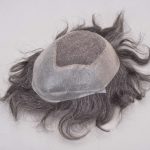








The fear people bring to the airport is specific: being asked to remove a wig in front of a queue of strangers. It is worth separating that fear from documented procedure, because the procedure gives you more control than most travelers realize.
What United States screening procedure actually provides
The Transportation Security Administration guidance on disabilities and medical conditions is the source to read, and it covers prostheses, casts, braces, slings and support appliances. A few points stand out.
You can tell the officer before screening starts. TSA states that you may inform the officer about a disability or medical condition verbally, by using the TSA Notification Card, or by providing medical documentation, and that you should inform the officer about the location of a prosthesis or support appliance before screening begins. You do not have to explain your medical history to do this.
Removal is described as voluntary. The guidance says you may voluntarily remove a prosthesis or support appliance prior to screening and submit it for X-ray screening. That is framed as your option, not a demand.
Private screening is available on request. TSA states that at any time during the screening process you may request private screening and have a witness of your choice present. It also states that TSA will not request that you expose a sensitive body area during screening.
You can escalate. If your screening experience does not meet expectations, TSA says you may request to speak with a supervisor at the checkpoint, or submit concerns to the TSA Contact Center afterward.
Two practical notes. Additional screening for prosthetic items can include inspection, hand-held metal detector screening, a test of your hands, and a test for traces of explosives. And metal in a wig, such as clips or pins, can trigger an alarm in a walk-through metal detector or body scanner, which is a reason to consider non-metal securing on travel days if that is easy for you. Rules differ outside the United States, so check the relevant authority for your route rather than assuming these procedures apply everywhere.
Carry on, do not check
Wigs belong in your carry-on. Checked bags get delayed, misrouted and crushed, and a hair prosthesis is not something you can replace at a destination on a Sunday. If a wig is medically important to you, treat it the way you would treat medication.
For packing, the enemy is compression and friction. Hair fiber damage is mechanical, and as described in a peer-reviewed review of hair cosmetics and fiber damage, the cuticle consists of overlapping keratin scales whose orientation produces hair’s differential friction effect, with friction rising when scales are raised or damaged and repeated rubbing progressively wearing them away. A wig squashed under a laptop and rubbed against a bag lining for eight hours is being groomed the hard way.
The workable method is simple: brush it out, turn the cap gently inside out or stuff it lightly with tissue or a soft item to hold its shape, put it in a dedicated box or a breathable bag rather than a sealed plastic one, and pack it on top rather than at the bottom. Bring a wide-tooth comb. Expect to spend a few minutes reviving it on arrival, and give it time on a stand before you need it.
Planning for a different climate
Destination weather changes how the fiber behaves, and it is worth thinking about before you pack products. Hair is hygroscopic, and research on the kinetics of moisture sorption by hair shows fibers swell as they take up moisture and identifies a structural transition around 30 percent relative humidity, attributed to the opening of the hair’s inner structure to accommodate more water.
In practice: going somewhere humid means a human hair style will drift back toward its natural texture and lose a set, so pack for a style that tolerates that rather than one that depends on staying pin straight. Going somewhere dry or cold means the opposite problem, static and stiffness, and leave-in conditioning earns its space in the bag. Heat also shortens adhesive hold, so if you bond and you are heading somewhere hot, bring more product than you think you need and a non-adhesive backup.
Finally, do not test anything new on a trip. A new adhesive, a new cap or a new liner tried for the first time in an unfamiliar climate, far from your usual options, is how a manageable travel day becomes a miserable one.