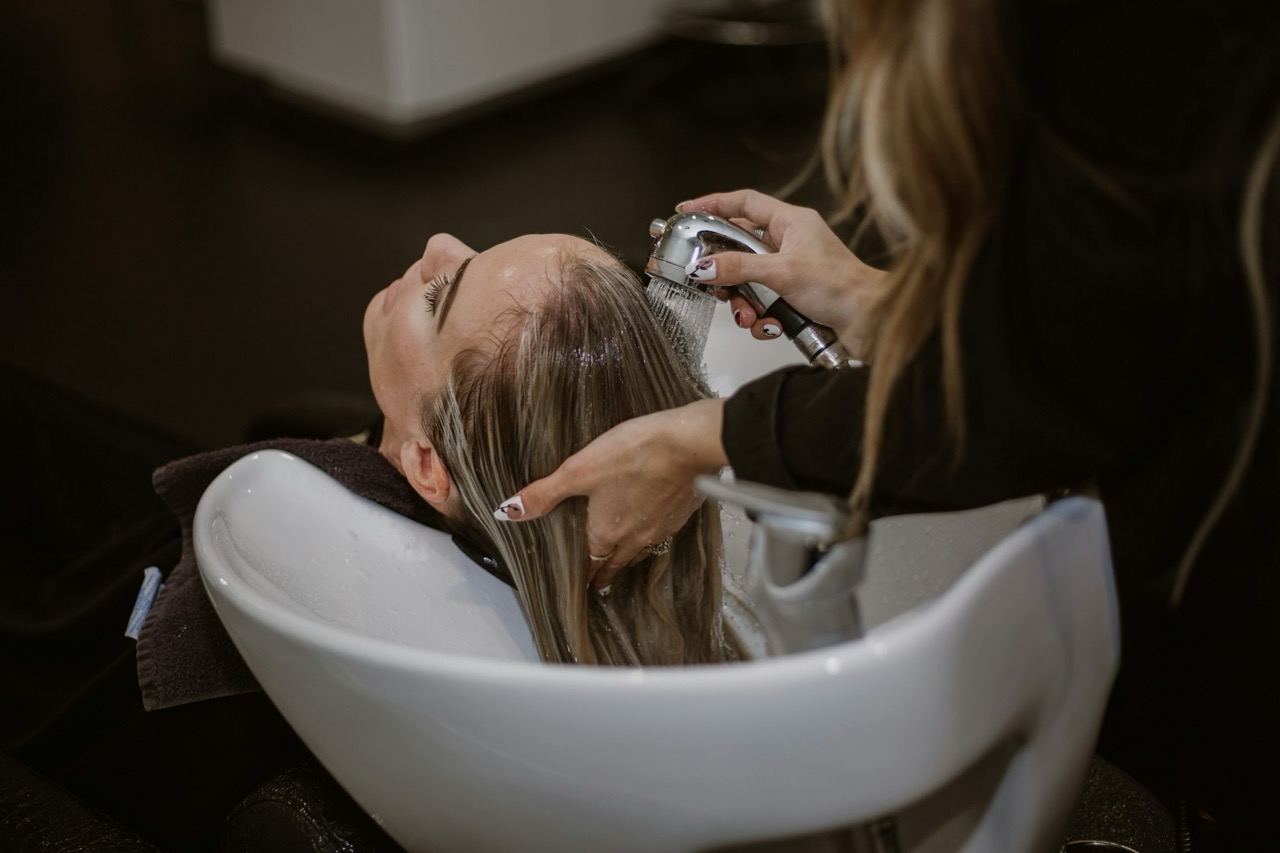






You matched the wig to your own hair under the store lights. It was right. You walked out the door into daylight and it went brassy, or ashy, or a full shade off. Nothing about the wig changed in those ten seconds. What changed was the light hitting it.
Color is a three-way collaboration
The color you perceive is not a property of the object alone. It is the product of three things: the spectrum of the light source, how the object reflects each wavelength in that spectrum, and how your eye and brain interpret the result. Change any one and the perceived color changes.
This is not a fringe effect. The US Department of Energy’s lighting research program treats it as a central problem in lighting quality. Its work on color rendition examines how perceived qualities including naturalness and vividness shift in response to changes in the spectral power distribution of light sources, and describes the family of metrics developed to characterize those shifts. Two lamps can look identically white to your eye and still render a colored object very differently, because a given apparent whiteness can be produced by many different underlying spectra.
The specific failure case has a name: metamerism. Two samples match under one illuminant and stop matching under another, because their reflectance curves are different shapes that happened to produce the same result under the first light. Retail lighting is often warm and heavily weighted toward the red end. Overcast daylight is cool and broad. A wig and your natural hair can agree under one and disagree under the other.
Why wig hair is especially prone to this
Your own hair gets its color from melanin distributed through the cortex. Most wig hair, and effectively all light-colored wig hair, gets its color from dye applied after the natural pigment was chemically removed. Those are different physical systems with different reflectance behavior.
Microscopy of excessively bleached hair published in Applied Microscopy shows why. The study documents cortical porosity created as melanin dissolves out during bleaching, along with separated and peeled cuticle scales and a rougher surface. A porous cortex and a roughened surface scatter light differently from an intact pigmented fiber. Deposited dye then sits on and in that altered structure. The result is a fiber that reflects light on a different curve from natural hair even when the two look identical in one particular room.
This also explains why blonde and light brown units are the hardest to match, and why a dyed-over-bleached wig can pull warm outdoors while reading neutral indoors.
A practical method for judging color before you commit
- Check in at least three light conditions. Indoor artificial light, direct daylight, and open shade. If the match holds in all three, it will hold most places.
- Take it to a window or outside. Daylight is the broadest spectrum you have easy access to and the most punishing test.
- Do not trust your phone. Automatic white balance is actively working to normalize the scene, which is the opposite of what you need. If you must photograph, lock the white balance and include a plain white object in the frame for reference.
- Compare against your own hair, not against a swatch card. Hold a strand of the wig directly against your hair at the temple, in daylight.
- Judge the undertone, not the level. Most failed matches are wrong in warmth or coolness rather than in lightness. Lightness is easier to forgive.
What buys you forgiveness
Some units are much more tolerant of lighting shifts than others. Anything with dimension helps: rooted or shadowed color at the scalp, subtle highlighting, or a multi-tone blend. A flat single-process color has one reflectance curve and either matches or does not. A blended color contains several tones at once, so your eye reads an average and small shifts get absorbed.
A darker rooted section at the part line is doing this work specifically. It also happens to be what real hair looks like, since regrowth almost always sits a shade or two off the lengths.
If you are ordering online, ask sellers for a photograph taken in natural daylight without filters, and ask whether the return window survives trying the unit on. Both requests are reasonable, and how a seller answers tells you something.