Wig Parting: Creating a Believable Scalp Line
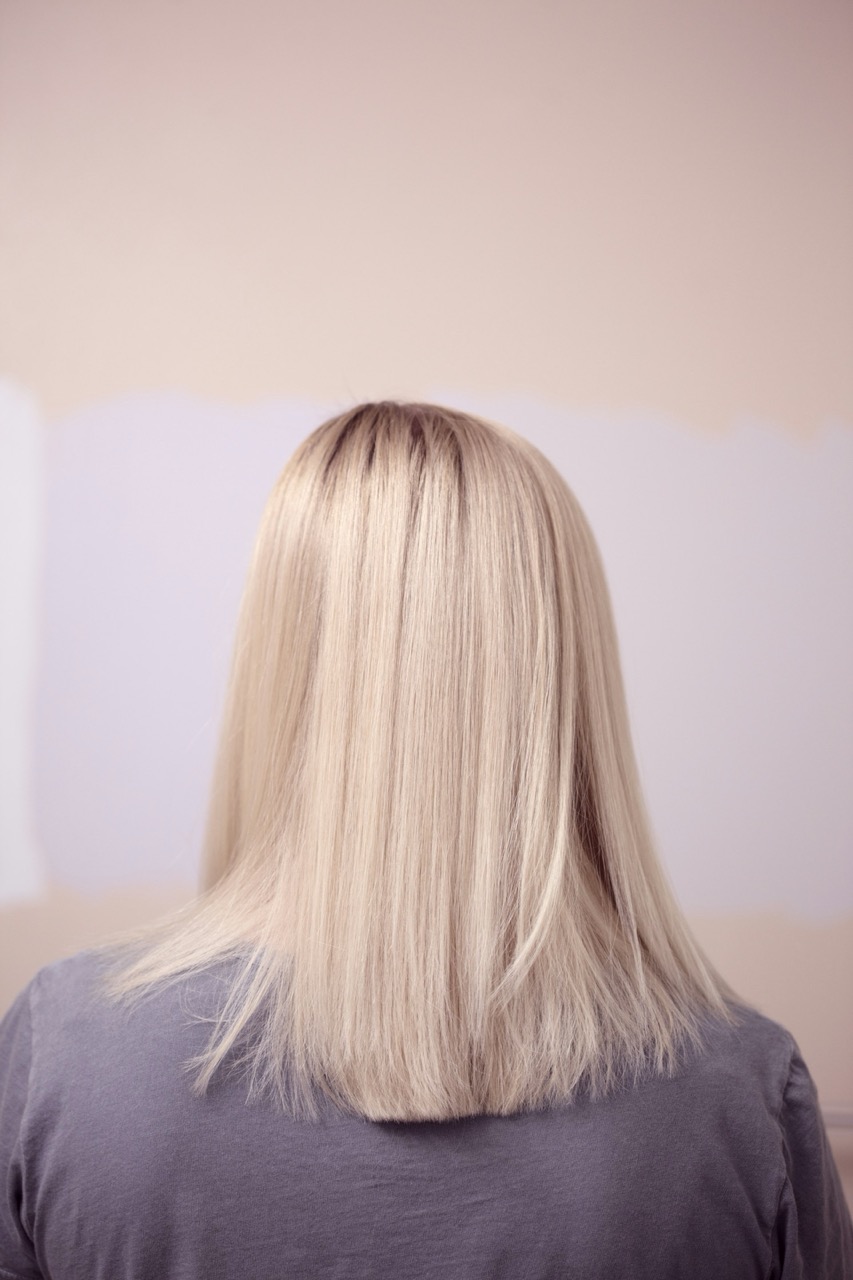
Look closely at a wig that is not convincing and the part is usually the culprit. The hair can be beautiful, the color can be right, the cap can fit well, and the whole thing still reads as a wig because of a strip of scalp that is a millimeter too straight and about twice as populated as any real head. Fixing that is less about buying an expensive product than about understanding what a real parting actually looks like.
Why Factory Partings Give the Game Away
Three things go wrong at once. The first is geometry. Machines make straight lines, and a real part is never straight. It wanders, it forks, it takes small detours around cowlicks. The second is density gradient. On a real head, hair does not stop at the parting and resume on the other side; it thins gradually toward the line. Many wigs go from full density to bare base in essentially no distance. The third is the knots. Individually tied knots sit as small dark dots on the base material, and en masse they read as a shadow that no scalp has.
It helps to know roughly what you are imitating. A trichoscopy study of healthy scalps published in a peer-reviewed dermatology journal measured follicular unit and hair density across scalp regions, reporting about 96 follicular units per square centimeter frontally and hair density around 160 hairs per square centimeter, with temporal areas notably sparser at roughly 79 units and 124 hairs. Just as usefully, it broke down how many hairs each unit contains: roughly 60 percent of follicular units are single-hair, about 29 percent are two-hair, and only around 9 percent are three-hair units.
That last figure is the one worth sitting with. Real scalp at a parting is dominated by single hairs emerging in an irregular scatter, not by dense clusters. It is also why a part looks translucent up close rather than solid. Wigs that pack multiple hairs per knot right up to the part line are working against the arithmetic.
Cap Types and What Each Lets You Do
Not every construction supports a movable part, and it is worth being clear-eyed about this before you start altering anything. A hand-tied lace top or a full lace cap generally lets you part anywhere within the lace area, because hairs are knotted individually and can be redirected. A monofilament top gives similar freedom over the mono panel. Silk top constructions hide knots beneath an extra layer, which helps the shadow problem but usually fixes the part location. A basic wefted cap with a pre-cut, pre-sewn part gives you essentially no movement at all, and trying to force a new part on one will just expose the weft tracks underneath.
If a movable part matters to you, buy the construction that allows it. No amount of technique rescues a cap that was never built for it.
Concealers, Powders and Their Actual Limits
The standard advice is to tint the base or the knots toward your skin tone using a scalp powder, a tinted concealer or a lace tint. This genuinely works, and it works for a specific reason: it reduces the contrast between the dark knot and the pale base, so the eye stops reading a uniform shadow.
Be honest about the limits, though. Powder does not change density and it does not change geometry, so it will not save a part that is too straight or too full. It transfers onto light-colored clothing, it comes off in humidity and sweat, and reapplying it daily means you are handling the part area daily. Match to your scalp tone rather than your skin tone, since scalp usually reads lighter, and apply less than you think you need. Heavy application swings the problem the other way and produces a flat, opaque strip that looks like makeup, because it is.
Plucking the hairline and part area to reduce density is the other common technique. Done in small amounts with tweezers, working a few hairs at a time and stepping back often, it creates the gradient a real part has. Done in bulk, it is irreversible. Hair does not grow back on a wig.
Maintaining the Part Without Wrecking It
The most common way people ruin a good part is by touching it constantly. Every session of combing, brushing, tinting and re-parting at the same fixed line puts mechanical stress on the knots there, and knots that loosen shed hair permanently. Set the part when the wig is off your head, on a form, then leave it alone during wear.
The same principle applies to your own scalp underneath, if you have hair. The American Academy of Dermatology notes in its guidance on hairstyles that pull and cause traction hair loss that repeated tension at the same location can lead to broken hairs, a receding hairline and eventually permanent loss, and advises varying styles so hair can recover. Rotating where you anchor a wig, and varying your own part underneath, is the low-effort version of that advice. If you notice pain, stinging, crusting or thinning where a wig sits, that is a reason to see a dermatologist rather than to reach for more powder.
Want to try before you buy?
Our directory lists wig shops, hair replacement studios, and hair loss centers in every US state, with addresses and phone numbers you can verify. Feel the fiber in person first.
Find a wig shop near you

