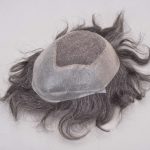






A matted wig looks like a single catastrophic event but it almost never is. Matting is the visible endpoint of a slow surface change, and understanding that change tells you both how to undo it and how much of it you can undo.
Intact hair has a cuticle surface coated in a thin lipid monolayer of 18 methyleicosanoic acid, which makes the fiber hydrophobic and slippery. Processing strips it. The review On Hair Care Physicochemistry describes how removal of that layer makes hair more hydrophilic and prone to swelling, and increases friction between fibers, shifting the surface from hydrophobic and weakly charged to hydrophilic, polar and negatively charged. Wig hair has usually been through acid baths, bleaching or dyeing before it reached you, so it starts life on the wrong side of that shift.
Higher fiber to fiber friction means strands grip each other instead of sliding past. Add movement at the nape, salt from dried sweat, and product residue that acts like glue, and the grip compounds into a mat.
Set Up Before You Touch It
Put the wig on a head form and secure it with T pins. Detangling a wig held in your lap means you are pulling in two directions at once and you will lose hair you did not need to lose.
Get slip into the fiber first. A generous leave in conditioner or a detangling spray, worked into the matted region and left for ten to twenty minutes, does most of the real work. Conditioners function by lowering inter fiber friction and reducing combing forces, which is precisely the variable driving the mat, as Hair Cosmetics: An Overview describes. Do not rush the dwell time. Ten minutes of waiting removes more tangle than ten minutes of pulling.
Work on damp hair, not soaking wet and not bone dry. Have a wide tooth comb, your fingers, and a spray bottle to hand.
Bottom Up, In Small Sections
Clip away everything you are not working on. Take a section no wider than two inches. Start at the very ends, comb through until that inch runs clear, then move up an inch and repeat. Never start at the root and drag downward, which just pushes the tangle into a tighter knot at the ends.
Hold the section firmly above where you are combing so the tension lands in your hand rather than in the knots at the cap. Those knots are what attach the hair to the base, and pulling against them is how detangling turns into shedding.
Use your fingers to separate large mats before any comb touches them. Fingers can feel where the mat gives and a comb cannot. If a comb stops, stop with it, back out, add more product, and separate by hand.
Expect to lose some hair. Some shedding is normal and unavoidable. The goal is to lose the hair that was already detached, not to tear out hair that is still knotted in.
Knowing When a Mat Is Unrecoverable
Be honest with yourself about the point of no return. The signs a mat will not come back:
- The mat is felted rather than tangled, meaning fibers are locked into a dense pad you cannot separate at all with fingers after a long soak.
- The mat sits at the nape and covers most of the bottom third of the wig, which is the highest friction zone and usually the most degraded.
- Hair comes out in visible clumps rather than strands during early gentle work.
- The fiber feels gummy or elastic when wet, which indicates the cortex is compromised.
In those cases the cost benefit shifts. Cutting the matted section out and reshaping the wig shorter often produces a better result than hours of work that thins the wig to transparency. On a synthetic wig, a felted mat is generally terminal, because the frizz driving it is mechanical abrasion of the filament surface and does not reverse.
Preventing the Next One
Mats form in predictable places for predictable reasons, which makes prevention unusually effective here. Brush the wig out before and after every wear, not just before. Tie longer wigs back in a loose braid or a low bun for anything involving wind, movement or a coat collar. Rinse promptly after heavy sweat, since dried salt is abrasive as well as drying. Keep leave in conditioner on the ends where friction is highest, and store the wig on a form rather than crushed in a drawer.
None of that is glamorous. It is also close to the entire difference between a wig that lasts a year and one that lasts three.