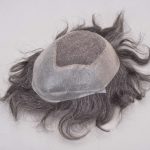




Before spending an evening trying to rescue a synthetic wig, it is worth sorting the problem into one of two piles, because only one of them responds to effort.
Reversible: product buildup, static, dullness from residue, tangles that have not felted, a curl pattern that has dropped from heat or damp, and a style that has simply gone shapeless.
Not reversible: frizz. Frizz on a synthetic wig is mechanical abrasion of the filament surface from friction against collars, pillows and itself. The filament is physically roughened. Nothing puts that surface back. Also not reversible: fibers that have melted or fused, and color that has faded from sun exposure.
If most of what is wrong with your wig sits in the second pile, the honest answer is that revival will disappoint you and the money is better spent on a replacement.
What a Deep Clean Actually Recovers
Start here, because a surprising share of tired looking wigs are just dirty. Cool water soak, a small amount of gentle shampoo, no scrubbing, thorough rinse. Buildup from leave in sprays, dry shampoo and hairspray flattens the fiber and dulls it, and removing it recovers a real amount of the original look.
Do not use clarifying shampoo. It is formulated for a keratin surface that a synthetic wig does not have, and it strips whatever factory finish is left.
The Fabric Softener Question, Answered Honestly
This is the most repeated piece of synthetic wig advice on the internet and it deserves a straight answer rather than either endorsement or dismissal.
Fabric softeners work primarily through cationic surfactants, the same broad chemistry family used in hair conditioners. The polymer science review On Hair Care Physicochemistry describes how cationic surfactants such as cetrimonium chloride and behentrimonium chloride reduce static electricity and smooth surfaces by neutralizing negative charge, and how film forming agents coat a fiber and lower friction. So the mechanism people are reaching for is real: a cationic surfactant deposited on a synthetic filament will reduce static and add slip.
Two caveats worth stating plainly. First, that mechanism was characterized for keratin fiber, where the surface charge chemistry it exploits is well described. Synthetic wig fiber, which the FTC defines in its generic fiber name rules at 16 CFR 303.7 as an acrylonitrile based polymer, has a different surface entirely, and I could find no peer reviewed work testing fabric softener on wig fiber specifically. Second, and more usefully: the effect is cosmetic and temporary. It coats over frizz, it does not repair it, and heavy application leaves a limp, greasy wig. Purpose made synthetic fiber conditioners do the same job with formulations meant for the material.
So: it can help with static and slip, it will not restore a worn wig, and a heavily diluted application rinsed out is the only version worth trying.
Steam for Curl Reset
Because a synthetic wig’s style is heat set during manufacture, heat is the only thing that can reshape it. Steam is the gentlest version of that.
Roll damp sections onto perm rods or flexi rods, pass a garment steamer over them from several inches away in brief passes, then let the wig cool and dry completely before unrolling. Cooling is what locks the new shape, so unrolling early wastes the whole exercise.
The risks are real. Too close, too long, and the fiber melts, fuses or goes permanently limp, and none of that is recoverable. Test on a small hidden section at the nape first, every time, on every new wig. Heat friendly synthetic tolerates more of this than standard synthetic does. Standard synthetic tolerates less than the internet implies.
Trimming the Perimeter
The most underrated revival technique is also the least exciting. Damage concentrates at the ends and at the nape where friction is highest, so cutting off the worst two inches often transforms how the wig reads, especially on a bob or a lob where the perimeter is the whole shape.
Cut dry, on a head form, in small increments, with proper shears. Point cutting into the ends softens the blunt line and hides remaining irregularity.
When to Stop
If the cap elastic has gone slack, if the lace has torn, if the crown has thinned where knots worked loose, or if the frizz extends past the ends into the mid lengths, revival is not the right project. Those are structural rather than cosmetic, and a wig can look fine in the mirror while sitting badly enough that you stop wearing it.