




Every hair system base is a compromise between three things that fight each other: how invisible it is, how long it lasts, and how well it breathes. Thin the material for realism and you lose durability. Add polyurethane for a strong bond and you lose airflow. Nobody has solved this, which is why four families of base material coexist rather than one winning.
Lace
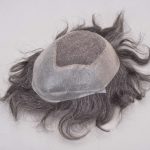
Lace is a fine mesh, usually Swiss or French, with hair knotted into it by hand. It is the realism benchmark. Because the mesh is open, scalp shows through between hairs, and hair appears to emerge from skin rather than from a surface.
The tradeoffs are real. Lace is fragile, especially French lace at the fragile front edge, and knots work loose over time. Bonding is via adhesive or tape at the perimeter, which is secure enough but reapplied often. Lifespan is generally the shortest of the group, commonly a few months of daily wear, with the front edge failing first.
Lace is also the most breathable option by a wide margin, which matters more than people expect.
Polyurethane, usually called poly or skin
Poly is a thin polyurethane film. Hair is injected or knotted and the base sits flat against the scalp. The very thin versions can be strikingly undetectable because there is no visible mesh texture at all, and the edges melt into skin.
Poly bonds extremely well. It gives adhesive a continuous, non-porous surface to grip, so bonds tend to be strong and long-lasting, and cleaning residue off poly is easier than picking it out of lace. Thicker poly is also the most durable option in this list.
The cost is airflow. Poly is occlusive by design, and that is not a marketing distinction. Research in the Journal of the Royal Society Interface on controlling skin hydration through occluding films found that an occluding layer raises water activity at the skin surface and significantly increases stratum corneum hydration, and that increased hydration raises the permeability of the stratum corneum, enhancing molecular mobility in its lipid and protein components and facilitating penetration of small molecules.
Two practical implications. First, sustained occlusion on a hot scalp gets uncomfortable and sweaty. Second, a more hydrated, more permeable stratum corneum under a continuously bonded base is not an ideal environment for prolonged contact with adhesive chemistry.
That matters because those adhesives are documented sensitizers. A review in Advances in Dermatology and Allergology on acrylates as a cause of allergic contact dermatitis includes a case of a man who developed a pruritic eczematous scalp rash four weeks after using a capillary prosthesis fixed with an acrylate-based liquid glue, and notes that sensitization can develop after months or even years of use. If your scalp is persistently red, itchy or weeping under a poly base, that is a dermatologist question rather than a switch-brands question.
Monofilament
Mono is a fine but more substantial mesh than lace, durable enough to take hand-tied knots and hold up. It sits between lace and poly on most axes: more realistic than poly at the parting because hair can move in any direction, more durable than lace, reasonably breathable.
Mono is generally not used alone at the very front, because the material is visible at an exposed edge. It is usually the top and crown section, with something thinner at the perimeter.
Hybrids, which is what most systems actually are
Hybrids exist because the compromises are zone-specific. A common construction is lace at the front hairline where invisibility matters most, monofilament through the top for parting realism, and poly around the sides and back where bond strength and durability matter and nobody is looking closely.
This is usually the right answer. The question is which zones get which material, and that depends on you.
Matching base to your life
- Hot, humid climate or heavy sweating. Lean toward more lace and less poly. Occlusion plus sweat is the combination people abandon systems over.
- Very active or high friction. More poly. Bond security and durability win over marginal realism gains.
- Cost sensitive. Poly-heavy bases last longer per unit, which changes annual cost even if realism is slightly lower.
- Adhesive sensitivity. More lace, tape rather than liquid where possible, and a conversation with a dermatologist before continuing.
Ask any supplier to specify the material by zone rather than describing the whole system with one word. That single question tells you more than most product descriptions do.