





Building fibers are one of the few cosmetic products that do exactly what they claim and nothing more. They are keratin or cotton based powders with an electrostatic charge that makes them cling to existing hair shafts, thickening each strand visually and darkening the scalp underneath so contrast drops. In good light, on the right head, they are genuinely convincing. The catch is that they need hair to cling to, and that is the whole story of why people eventually leave them.
The real limits of fibers
Fibers fail in predictable ways. Wind and rain are the obvious ones, though modern setting sprays handle both better than they used to. Pillowcases, hats and anyone touching your head are less forgiving. Swimming is out. Applying them daily and washing them out daily adds a real chunk of time to your routine, and the products themselves are a recurring monthly cost that quietly adds up.
The more fundamental limit is coverage. Because fibers work by attaching to existing strands, their effectiveness scales with how much hair you still have in the area you are covering. At mild diffuse thinning, they look excellent. Across a fully bald crown or a receded frontal area with no anchor hairs, they have nothing to grip and the result reads as tinted scalp rather than hair.
The threshold where they stop working
There is no clean number, but there is a clear mechanism. Androgenetic alopecia is progressive by nature. The StatPearls review of androgenetic alopecia describes it as progressive miniaturization of hair follicles driven by androgen receptor activation shortening the anagen growth phase, so hairs get thinner and shorter over time. It notes that roughly 50 percent of Caucasian men are affected by age 50 and around 80 percent by age 70, with loss concentrated at the vertex and frontotemporal regions in men, while women more often see diffuse thinning at the crown with the frontal hairline spared.
That progression is what moves the goalposts. Fibers do not stop working because the product changed. They stop working because the anchor hairs they depend on have miniaturized past the point of holding anything. Most people describe the same experience: fibers that looked great two years ago now need twice the product and still show scalp under overhead light.
Some practical signs you are approaching the threshold: you are using noticeably more product for the same result, the effect vanishes entirely in bright or overhead lighting, you are avoiding photographs, or you find yourself concentrating product in one region that never quite matches the rest.
Managing the overlap period
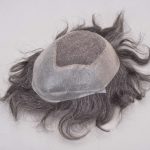
Going from fibers to a bonded system is a visible change, and people handle that in two ways. The abrupt approach is to make the switch during a break from work or social life and simply present the new look. The gradual approach is to start with a system cut close to your current apparent density, then increase density over subsequent units. The gradual route costs more and takes longer, but it is far less conspicuous.
A middle path worth considering is running both for a while. Fibers can blend the perimeter around a system’s front edge while you get used to it, and having a fallback for the days you do not want to bond removes a lot of the anxiety from the transition.
Where the costs cross over
Fibers are cheap monthly and free of appointments. A hair system carries units, adhesives, solvents, service visits and time. On raw cost, fibers win almost indefinitely. The crossover is not really financial; it is about what each thing can deliver. Once fibers no longer produce an acceptable result, their low cost is irrelevant, because you are paying for something that does not work.
Scalp considerations when you switch
Moving to a bonded system changes what your scalp deals with. Instead of a powder sitting on hair, you have adhesive in sustained contact with skin, an occlusive base, and a removal process involving solvents. Skin that never reacted to anything may still react to adhesive, and the front hairline is both the most visible area and the one under the most mechanical stress.
This is also a good moment to get the underlying diagnosis confirmed if you never have. The American Academy of Dermatology makes the point that effective treatment for hair loss begins with finding the cause, that a board certified dermatologist diagnoses by examining the scalp and hair and may order blood tests or a scalp biopsy, and that the earlier treatment starts the more likely regrowth becomes. Plenty of people spend years camouflaging hair loss they never had assessed, and some causes are not pattern loss at all.
None of this is medical advice, and a hair system is a cosmetic decision rather than a treatment. Get the diagnosis from a clinician, then decide about coverage separately.