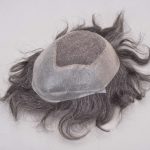






The names describe where the lace is, and almost everything else follows from that. A lace front wig has a lace panel across the front hairline, typically an inch or two deep, with the rest of the cap built from wefts or another machine-made base. A full lace wig is lace across the entire cap, with every strand hand tied into it.
What full lace buys you
Two things, mainly, and both are about freedom of movement.
The first is parting. With lace everywhere, you can part the hair anywhere on the head and the base underneath will read as scalp. On a lace front unit, you are limited to the front section; go further back and you hit weft tracks.
The second is high styling. A full lace unit can go into a high ponytail or an updo with the nape exposed, because there is no visible weft structure at the back or crown. This is the single most common reason people pay the premium, and it is a legitimate one.
There is also a comfort argument. Hand-tied lace is generally lighter and more open across the cap than a wefted base, which some wearers find noticeably cooler over a long day.
What you give up
Price. A comparable full lace unit commonly runs two to four times a lace front. The gap is labor: every strand is tied by hand into the base, and a full cap is many times the ventilated area of a front panel.
Durability. Lace is delicate by design, and a base made entirely of it has far more surface exposed to stress. Tears at the ear tabs and along the perimeter are the usual failure point. Repairs are possible, but a good repair costs real money and repeated repairs eventually outrun the value of the unit. A wefted base is simply tougher.
Application demand. Full lace usually needs securing all the way around rather than just at the front, which means more time, more skill, and more adhesive against skin.
The adhesive question, which is worth taking seriously
More lace often means more glue, and glue at the hairline is not a neutral variable. Hair prosthesis fixatives are a documented cause of allergic contact dermatitis.
A case report on allergic contact dermatitis to wig adhesive published in the International Journal of Trichology describes a patient with itchy, oozing lesions confined to the anterior hairline where the adhesive had been applied, persisting for three months. Patch testing produced a positive reaction to 2-hydroxyethyl methacrylate, and the adhesive itself was documented as containing ethyl cyanoacrylate at 90.6 percent along with polymethyl methacrylate and traces of organic sulfonic acid. The lesions resolved after the patient stopped using the wig and received treatment.
That is not an isolated oddity. A review of acrylates as a significant cause of allergic contact dermatitis explicitly lists hair prosthesis fixatives among newer non-occupational exposure sources, alongside glucose sensors and eyelash extension adhesives, and notes that patch testing is the gold standard for confirming acrylate allergy.
None of this means you should avoid adhesive. It means adhesive exposure is a real variable in the lace front versus full lace decision, and that persistent redness, itching, weeping or burning at the hairline is a reason to stop and see a dermatologist rather than to switch brands and keep going. Patch testing a small area before a full application is a sensible habit regardless of which cap you choose.
Who should probably skip full lace
- First-time wearers. The application is less forgiving and the material is easier to ruin while you are still learning.
- Anyone who wears one unit daily. Durability matters more than styling range when a wig is on your head twelve hours a day, every day.
- People with known adhesive sensitivity. Fuller lace coverage tends to push toward more skin contact, not less.
- Anyone who never parts past the front or wears high styles. You would be paying for capability you do not use.
The reasonable default for most people is a good lace front with a comfortable, well-constructed cap. Move up to full lace when you have identified a specific styling need it solves, not because it sits higher on a price list.