



Two things go wrong in summer and they are usually discussed as one. The first is thermoregulation: you are wearing an extra layer in the heat and your body has to deal with it. The second is fiber behavior: hair, human and synthetic, responds to moisture in the air, which is why a style that held perfectly in the morning has collapsed or frizzed by noon. The first is a safety question. The second is a styling annoyance. Do not let the styling problem distract you from the safety one.
Take the heat part seriously
Anyone can develop heat-related illness, and the useful skill is recognizing the early symptoms rather than pushing through them. The CDC guidance on heat and your health lists the signs of your body overheating: muscle cramping, unusually heavy sweating, shortness of breath, dizziness, headaches, weakness and nausea. Its core advice is to stay in the shade when outside for long periods, take breaks, schedule outdoor activity for the coolest parts of the day, and drink fluids throughout the day rather than waiting until you feel thirsty. It also flags that fans can increase body temperature when indoor temperatures exceed 90 degrees Fahrenheit, that many medications increase risk of dehydration or overheating, and that people with heart disease or asthma, pregnant women, adults over 65 and young children face higher risk.
Applied to wigs, that means one rule above all others: if you feel any of those symptoms, get to shade or air conditioning, hydrate, and take the wig off. There is no appearance outcome worth ignoring dizziness or nausea over. Plan hot days so that removing it is possible, which usually just means knowing where you can step away for a few minutes.
Cap construction and venting
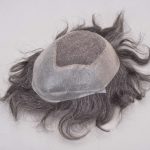
Not every cap breathes equally. Open wefting with visible gaps between the rows lets air move in a way that a fully sealed base does not. Full silicone or polyurethane bases seal well and vent poorly, which is a real tradeoff rather than a defect. Lace and mesh sections allow more airflow than solid material. Lower density means less insulating bulk sitting against your head, and shorter styles keep hair off the back of the neck, where a lot of the discomfort actually comes from.
None of this makes a wig cool. It makes it less hot, which is a meaningful difference over an afternoon.
Sweat and adhesive
Sweat is the main reason summer adhesive fails, and the failure is mechanical rather than mysterious: moisture at the skin surface interferes with the bond. Prepare the skin well, expect shorter hold in the heat, and plan a backup rather than assuming you can re-bond a sweaty hairline on the fly. A grip band or clips as an alternative on a very hot day is a reasonable choice, provided the band is not tightened past comfort.
Sweat also matters for the scalp itself. Salt and moisture sitting against covered skin for hours is a different exposure than a dry scalp under the same cap. Rinse and dry after a hot day rather than putting the wig straight back on.
What humidity does to fiber
Hair is hygroscopic, meaning it takes up and releases water depending on the surrounding air. Research on the kinetics of moisture sorption by hair shows that hair fibers swell as they take up moisture, and identifies a transition around 30 percent relative humidity attributed to the opening of the hair’s inner structure and accommodation of more water molecules. The study models absorption separately in the cuticle and cortex, indicating moisture penetrates progressively rather than instantly.
That is the mechanism behind everything you observe in August. Human hair fiber swells and softens as it takes up water, hydrogen bonds set during styling give way, and the fiber drifts back toward its natural curl pattern. Straight styles lose their set and curly textures expand. Heat-set synthetic fiber behaves differently, since its shape is fixed in the material rather than held by hydrogen bonds, so it holds a curl or a straight set better in humidity. Synthetic is not immune, though: it still frizzes with friction and surface damage, and once a heat-set synthetic style is disturbed you cannot simply restyle it.
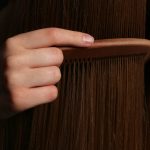
The practical response is to choose a style that tolerates change, keep a comb handy, and accept that some drift is physics rather than a product failure. If heat symptoms show up, none of that matters. Cool down first.