






A lot of wig content assumes the wig comes off at the end of the day and stays off until the next outing. For a large number of wearers that is not the pattern at all. In several communities a wig functions as a head covering worn in public across most waking hours, most days, for years. The practical consequences of that are different from occasional wear, and they are worth describing on their own terms.
This post is descriptive. Covering practices differ enormously between and within traditions, and the reasons behind them are theological, cultural and personal. Questions about whether, when and how to cover belong to a wearer and their own community and religious authorities, not to a wig blog. What a wig blog can usefully contribute is the mechanical and dermatological side.
Where wigs serve a covering role
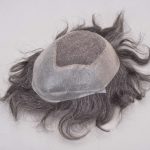
Among married women in many Orthodox Jewish communities, a wig, commonly called a sheitel, is one accepted form of hair covering, worn alongside or instead of scarves, hats or snoods. Some Muslim women wear a wig or hairpiece under or in combination with a scarf, and practice varies widely. Wigs also appear in a number of other cultural, ceremonial and professional covering contexts. In each case the wig is doing a job that a fashion wig is not asked to do: it is worn consistently, often over the wearer’s own hair, and it is not removed at will in public.
What long duration covering does to the scalp
Prolonged covering does appear to shift the scalp’s microbial balance. A cross sectional study in Scientific Reports compared the scalp microbiome of women who wore a hijab at least eight hours a day for at least five years with women who did not. It found Staphylococcus capitis and Malassezia restricta more prominent in the covered group and S. cohnii and M. globosa more prominent in the uncovered group, and concluded that women wearing hijab appear more prone to seborrheic dermatitis while those not covering appear more prone to bacterial skin infections. That is a difference in composition, not evidence of damage.
The barrier itself looks more robust than you might expect. A study in the International Journal of Women’s Health measured scalp hydration and pH in hijab wearing and non hijab wearing women and found no statistically significant difference between the groups. The authors concluded that hijab wearing women should not worry about scalp barrier impairment provided they have no underlying scalp or skin disorder and do not cover while the hair is wet.
That last clause is the one worth carrying forward. Covering damp hair traps moisture against the scalp under an occlusive layer, which is a much better description of the actual risk than covering itself. Dry the hair and the scalp fully before the wig goes on. This is the same advice that applies to anyone wearing a wig daily, but it matters more when removal is not a casual mid day option.
Fit priorities for all day wear
When a wig is worn for ten or twelve hours rather than three, small pressure problems compound. A few things become disproportionately valuable:
- A cap that fits without heavy reliance on tightened adjusters. Sustained tension at the nape and behind the ears is the most common source of all day headache and soreness.
- Breathable construction. Wefted or partially open caps vent better than fully closed ones, which matters across a long day and in warm climates.
- Lower density than you might otherwise pick. Weight you barely notice at hour two is noticeable at hour ten.
- A flat, smooth base layer underneath. Bulky braids or high buns under a covering create pressure points and heat pockets.
- A rotation of units rather than one worn daily, so each one gets time to air and recover its shape.
Because the wig is worn over the wearer’s own hair rather than instead of it, scalp and hair care underneath deserves the same attention it would get otherwise: regular washing, letting the scalp breathe at home, and not leaving tension styles in place for days.
If persistent flaking, itching, soreness or hair thinning develops under a covering, that is worth taking to a dermatologist rather than solving by trial and error. Covering is not the presumed cause, and a clinician can distinguish seborrheic dermatitis from contact reactions, tension related loss and other conditions that look similar from the outside.