


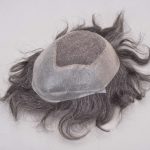







Most of the skin damage people blame on adhesive is not really caused by the adhesive. It is caused by impatience during removal. The bond is designed to hold through sweat and showers, so if you start peeling before the solvent has done its job, the thing that gives way is your skin, not the glue.
Dwell time beats force, every time
The single principle worth internalizing is that you are dissolving a bond, not pulling one apart. Solvent needs contact time to migrate into the adhesive and soften it. That means saturating the perimeter, waiting, then working inward in small sections, adding more solvent whenever you meet resistance. If a section will not release with gentle pressure, the answer is more solvent and more waiting, not a harder tug.
A few habits that make removal easier:
- Start at the back or the least sensitive edge, not the hairline.
- Apply solvent along the seam between skin and base rather than flooding the hair.
- Use a soft tool such as a plastic remover card, never a fingernail or anything metal.
- Give it minutes, not seconds. Many products want five to fifteen minutes of dwell.
- Stop if you feel sharp stinging. That is a signal, not something to push through.
Solvent categories and what they do to skin
Removers generally fall into a few families. Citrus or oil based removers work slowly and are gentler on skin, which makes them a common choice for people with sensitive scalps. Alcohol based removers work faster but are more drying and can sting on any broken skin. Solvent based products built around hydrocarbons or similar chemistry are the fastest and are typically reserved for stubborn residue or hard bonds, and they are the harshest on the skin barrier.
There is a real tradeoff here and no product escapes it: the faster a remover works, the more aggressive it usually is. Ventilation matters with the stronger categories, and so does keeping them away from eyes and mucous membranes. Follow the manufacturer’s directions on contact time rather than improvising.
What to do after the system is off
Residue left behind is a problem in its own right. Adhesive left on the scalp traps debris, and the next application bonds unevenly on top of it, which usually means an even harder removal next time. Clean the area thoroughly, wash with a mild cleanser to lift the remaining solvent, then dry completely.
Rest is underrated. Even a short window with nothing bonded to the skin gives the barrier a chance to recover, and many long term wearers deliberately build a gap into their maintenance cycle rather than reapplying immediately. If your schedule allows it, removing at night and reapplying in the morning is easier on the skin than back to back reattachment.
Irritation versus a true allergy
These get conflated constantly, and the distinction matters because the response is different. Irritant reactions come from direct chemical or mechanical damage and tend to show up quickly, roughly where the harsh product sat, and settle down once the exposure stops. Allergic contact dermatitis is an immune response. According to the StatPearls clinical review of contact dermatitis, it is a delayed type IV hypersensitivity reaction in which lesions usually appear 24 to 72 hours after exposure and peak around 72 to 96 hours. That review also notes something important: there are no clinical signs that reliably distinguish irritant from allergic contact dermatitis by appearance alone.
The symptoms themselves overlap heavily. The American Academy of Dermatology lists intensely itchy skin, a rash with discolored, swollen and hot skin, excessive dryness that may crack, tenderness, burning or stinging, hives, and fluid filled blisters that can ooze and crust. The AAD also points out that an allergic reaction can take time to appear, which is exactly why people misattribute it to whatever they used most recently.
When to stop guessing and see someone
A one time sting after a strong solvent is not the same as a rash that keeps coming back in the same place. If you are getting repeated reactions, persistent redness, oozing or crusting, spreading beyond the contact area, or anything that is not resolving within a few days of stopping the product, that is a reason to see a board certified dermatologist rather than to cycle through more products.
The StatPearls review describes patch testing as the gold standard for diagnosing allergic contact dermatitis, with allergens applied for 48 hours and results read over the following days. That is the process that actually identifies which ingredient is responsible, and it is worth doing, because guessing means you may switch brands and land on a product containing the same allergen. This article is informational and is not a substitute for a clinical evaluation.